
-

Watch HOPE Summit 2026 Videos
HOPE Summit 2026 was filled with old friends reuniting, new friends being made, and of course, plenty of inspirational and informative sessions designed to help people live well with lung cancer.
For...
IN THE SPOTLIGHT
-
Clinical Trial Access Isn’t Expanding. It’s Concentrating.
Clinical trials show us whether a new treatment is safe and effective. They are also an important way for patients to access cutting-edge care. For trials to truly serve the lung... -

Podcast: Lung Cancer Diagnosis—What Happens Next
What happens after a lung cancer diagnosis? In this first episode of LUNGevity’s Lung Cancer Voices of Hope podcast, lung cancer survivor Lisa Bistline shares her experience, from... -

Podcast: Why Community Matters in Lung Cancer Care
Why does finding community matter in lung cancer care? In this episode, lung cancer survivor and advocate Jill Feldman shares her experience, from losing multiple family members to... -

LUNGevity Foundation Invests $1.2 Million to Fuel Next Generation of Lung Cancer Research
LUNGevity Foundation announced $1.2 million in research awards that are designed to strengthen the lung cancer workforce and accelerate progress across the lung cancer continuum... -

Scalp Care, Shaving, and Head Coverings: Comfort Through Hair Loss
This video is a recording from a LUNGevity virtual meetup. Each month, we host multiple virtual meetups for those impacted by lung cancer to meet and connect with others who... -
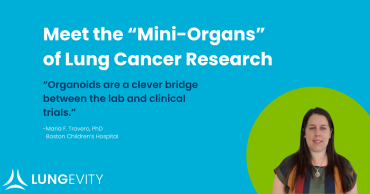
Meet The “Mini-Organs” of Lung Cancer Research
Though many of us would like to deny it, our neighbors affect us. Their loud music disturbs our sleep. The scent of their dinner wafts through an open window. The sight of their... -
Three Moments That Defined the 2026 Targeted Therapies of Lung Cancer Conference
The 2026 Targeted Therapies of Lung Cancer Meeting brought together leading clinicians, researchers, and patient advocates to discuss the latest advances shaping the future of lung... -

EGFR Virtual Meetup
EGFR patients/survivors - Join us the 1st Wednesday of every month to connect with others who share common experiences and build your community. -
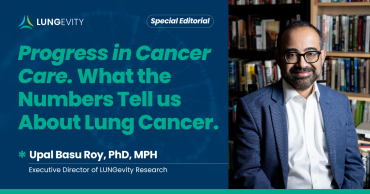
Progress in Cancer Care: What the Numbers Tell Us About Lung Cancer
Every January, the American Cancer Society releases a Cancer Facts & Figures report. It provides a clear view of where we stand in addressing cancer. The 2026 report brings both...
A cholesterol-dependent LRRC8A-caveolin-1 axis sustains KRAS/EGFR signaling, ribosome biogenesis and growth in pancreatic ductal adenocarcinoma
A cholesterol-dependent LRRC8A-caveolin-1 axis sustains KRAS/EGFR signaling, ribosome biogenesis and growth in pancreatic ductal adenocarcinoma
Albuminuria, but not eGFR, tracks diabetic retinopathy severity and retinal ischemia: population-based discovery, clinical replication, and OCTA evidence
Albuminuria, but not eGFR, tracks diabetic retinopathy severity and retinal ischemia: population-based discovery, clinical replication, and OCTA evidence
Association between extracellular-to-total body water ratio and eGFR decline in diabetic kidney disease: a longitudinal cohort study
Association between extracellular-to-total body water ratio and eGFR decline in diabetic kidney disease: a longitudinal cohort study
Histological transformation into pulmonary sarcomatoid carcinoma from lung adenosquamous carcinoma after radical resection of EGFR gene Exon-21 L858R mutation: a case report and literature review
Histological transformation into pulmonary sarcomatoid carcinoma from lung adenosquamous carcinoma after radical resection of EGFR gene Exon-21 L858R mutation: a case report and literature review
Clinicogenomic analysis of EGFR-mutant lung tumors identifies Rb pathway inactivation as a hallmark of squamous transformation
Clinicogenomic analysis of EGFR-mutant lung tumors identifies Rb pathway inactivation as a hallmark of squamous transformation
Multitargeted comparative evaluation suggests 2-Aoeobenoxmide shows favourable in silico binding compared to Tucatinib against ERα, HER2, AKT1, EGFR, and PIK3CA in breast cancer
Multitargeted comparative evaluation suggests 2-Aoeobenoxmide shows favourable in silico binding compared to Tucatinib against ERα, HER2, AKT1, EGFR, and PIK3CA in breast cancer
Case Report: Neoadjuvant chemoimmunotherapy achieving pathological complete response in two cases of stage III EGFR-mutant NSCLC with high PD-L1 expression
Case Report: Neoadjuvant chemoimmunotherapy achieving pathological complete response in two cases of stage III EGFR-mutant NSCLC with high PD-L1 expression
Aumolertinib with or without chemotherapy in EGFR-mutated advanced non-small-cell lung cancer (AENEAS2): an open-label, multicentre, randomised, controlled, phase 3 trial
Aumolertinib with or without chemotherapy in EGFR-mutated advanced non-small-cell lung cancer (AENEAS2): an open-label, multicentre, randomised, controlled, phase 3 trial
Bispecific Antibody Ivonescimab Added to Chemotherapy in EGFR-Variant Non–Small Cell Lung Cancer: The HARMONi-A Randomized Clinical Trial
Bispecific Antibody Ivonescimab Added to Chemotherapy in EGFR-Variant Non–Small Cell Lung Cancer: The HARMONi-A Randomized Clinical Trial
Bispecific Antibody Ivonescimab Added to Chemotherapy in EGFR-Variant Non–Small Cell Lung Cancer: Research Summary
Bispecific Antibody Ivonescimab Added to Chemotherapy in EGFR-Variant Non–Small Cell Lung Cancer: Research Summary